
The Science Behind Elon Musk’s Internet – Starlink
Posted on 16th Feb 2025 Leave a Comment

The Science Behind Elon Musk’s Internet – Starlink
Hey there! Have you ever wondered how Elon Musk’s Starlink is bringing high-speed internet to even the most remote places? Well, it all comes down to some really cool physics—orbital mechanics, radio waves, and laser communication. Let’s break it down in a fun and easy way!
1. Why Low Earth Orbit (LEO) Rocks!
- Traditional satellites hang out at 35,786 km above Earth (geostationary orbit), which leads to laggy internet.
- Starlink satellites cruise much lower, at around 550 km, making connections faster and reducing delays.
- The Physics Part: The lower the orbit, the shorter the distance signals have to travel. That means less lag, making video calls and gaming way smoother! The physics behind this is Kepler’s laws of planetary motion, which govern how these satellites maintain their orbits. Since they are in a lower orbit, they move much faster (about 7.8 km/s) than geostationary satellites, which are almost stationary relative to the Earth’s surface.

2. Beaming Internet with Radio Waves
- Starlink satellites use high-frequency radio waves (microwaves) to send and receive data.
- These waves travel at the speed of light and work on Ku-band and Ka-band frequencies to keep your connection stable.
- The Physics Part: Radio waves are part of the electromagnetic spectrum, meaning they can zoom through space without needing air. However, they can be affected by the Earth’s atmosphere due to Rayleigh scattering and ionospheric refraction, which can degrade signal strength. Starlink mitigates this by using beamforming technology, where signals are directed precisely at the receiving dish rather than spreading in all directions.

3. Space Lasers? Yes, Please!
- Some Starlink satellites talk to each other using lasers instead of ground stations.
- This allows for direct inter-satellite communication, reducing congestion and making connections more efficient.
- The Physics Part: Laser beams use coherent light, which means all the light waves move in sync, allowing for high precision and minimal data loss over long distances. Unlike radio waves, which can be scattered, lasers travel in a narrow beam, which reduces interference. The principle of total internal reflection ensures that signals remain focused and don’t scatter in unwanted directions.
4. How Starlink Dishes Stay Locked In
- Instead of those old-school rotating satellite dishes, Starlink uses phased array antennas to keep track of moving satellites.
- These antennas switch signals between satellites in milliseconds to keep your connection solid.
- The Physics Part: Phased array antennas rely on wave superposition and interference patterns to steer signals electronically—without any mechanical movement. By controlling the phase of the transmitted signals, they can create constructive interference in the desired direction, which allows for nearly instant tracking of moving satellites without lag.

5. Dealing with Weather and Other Challenges
- The Earth’s ionosphere can mess with signals, but Starlink’s adaptive beamforming helps keep things steady.
- Rain, clouds, and even solar storms can impact connectivity, but power adjustments and frequency switching help compensate.
- The Physics Part: As radio waves pass through different atmospheric layers, they undergo refraction, diffraction, and absorption. This can weaken or scatter signals, especially during heavy storms. Starlink compensates for these effects by adjusting transmission power and dynamically rerouting signals through alternate satellites, making use of Snell’s Law to predict and correct wave bending due to atmospheric variations.
Why Starlink is a Game-Changer
- Super low-latency internet: Perfect for gaming, streaming, and video calls.
- Internet anywhere: Great for people in rural areas or places where traditional internet just isn’t an option.
- Future-ready tech: With thousands of satellites working together, Starlink is building a global network that keeps getting better!
What’s Next for Space Internet?
Starlink isn’t stopping anytime soon. They’re constantly launching new satellites, improving speeds, and cutting costs. Whether it’s helping people on Earth or powering future Mars colonies, this is one of the coolest ways physics is shaping our world!
So next time you load a webpage using Starlink, remember—you’re literally sending signals through space at nearly the speed of light. How awesome is that?
Daily Physics: X-Ray, CT Scan, MRI , Ultrasound– What’s the Difference?
Posted on 16th Feb 2025 Leave a Comment

If you’ve ever had an injury or needed a closer look inside your body, you’ve probably come across X-rays, CT scans, or MRIs. But how do these medical imaging techniques actually work? Let’s break it down with a little physics!
1. X-Ray: The Quick Snapshot
- X-rays use high-energy electromagnetic waves (short-wavelength photons) to pass through soft tissues but are absorbed by denser materials like bones.
- This is why X-ray images show bones clearly while soft tissues appear faint.
- The physics behind it? X-rays interact with atoms via photoelectric absorption and Compton scattering, making denser areas more visible.

2. CT Scan: X-Rays in 3D!
- A Computed Tomography (CT) scan is like an advanced X-ray. Instead of one flat image, it takes multiple X-rays from different angles and combines them into a 3D image.
- It works using a rotating X-ray beam and a detector, processed by a computer to reconstruct detailed cross-sectional images.
- More X-ray exposure, but better detail—great for soft tissues, blood vessels, and organs.

3. MRI: Magnets, Not Radiation!
- Magnetic Resonance Imaging (MRI) doesn’t use X-rays at all. Instead, it uses strong magnetic fields and radio waves.
- The physics? The magnetic field aligns hydrogen atoms in your body, and radio waves disturb them. As they return to their original state, they emit signals that create detailed images of soft tissues.
- Safe from ionizing radiation, but not great for bones.

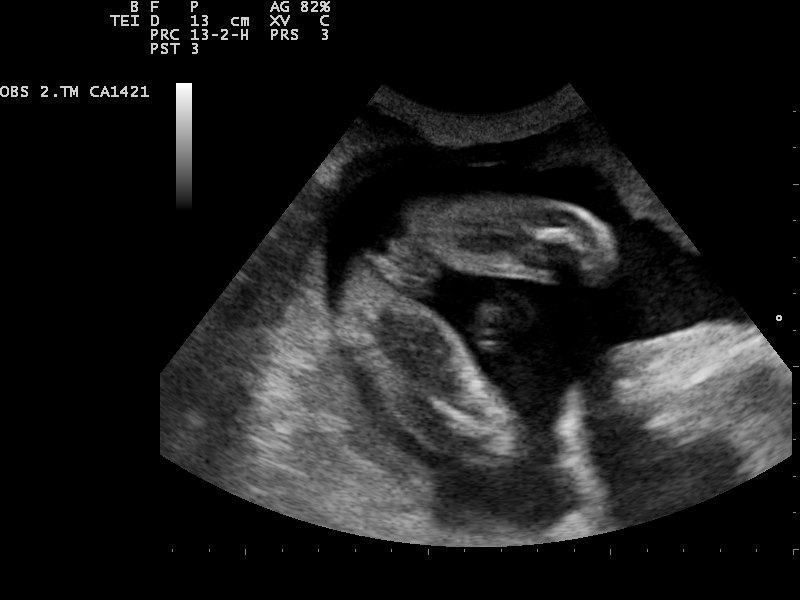
4. Ultrasound: Sound Waves at Work
- Instead of radiation, ultrasound uses high-frequency sound waves that bounce off tissues and create an image.
- The physics: It’s all about acoustic impedance—denser materials reflect more sound, which helps build an image.
- Used for pregnancies, heart monitoring, and real-time imaging.
Which One is Best?
- X-Ray → Quick bone imaging.
- CT Scan → Detailed 3D scans, better for soft tissues and emergency cases.
- MRI → No radiation, best for soft tissue like the brain, muscles, and joints.
- Ultrasound → Non-invasive, safe, and great for real-time imaging.
Physics Behind the Magic
- X-rays and CT scans rely on ionizing radiation and interaction with matter.
- MRI uses nuclear magnetic resonance, dealing with atomic energy transitions.
- Ultrasound operates through sound wave propagation and reflection.
Next time you hear about a scan, you’ll know exactly what’s happening inside that machine—physics at its best!
Piaget’s Stages of Cognitive Development: Understanding How Children Learn and Grow
Posted on 4th Apr 2023 Leave a Comment
Piaget Stages: Understanding the Development of Children
Jean Piaget was a Swiss psychologist who is well-known for his theory of cognitive development in children. According to Piaget, children progress through four stages of development that are characterized by distinct changes in the way they think and process information. Understanding these stages can provide valuable insight into the cognitive and intellectual development of children.
Sensorimotor Stage (Birth to 2 Years)
The sensorimotor stage is the first stage in Piaget’s theory of cognitive development. This stage lasts from birth to approximately 2 years of age. During this stage, children learn about the world through their senses and actions. They explore their environment by touching, tasting, smelling, and seeing things. At this stage, children are not yet capable of mental representation, which means they cannot think about things that are not currently present.
Preoperational Stage (2 to 7 Years)
The preoperational stage begins at around 2 years of age and lasts until approximately 7 years of age. During this stage, children begin to develop the ability to think symbolically. They are able to use words and images to represent objects and ideas. However, their thinking is still very concrete and egocentric. They are not yet able to understand the perspectives of others, and they tend to view the world from their own point of view.
Concrete Operational Stage (7 to 11 Years)
The concrete operational stage begins at around 7 years of age and lasts until approximately 11 years of age. During this stage, children become capable of more complex mental operations. They are able to perform logical operations and solve problems that require them to think abstractly. They are also able to understand the perspectives of others and to think in a more systematic and organized way.
Formal Operational Stage (11 Years and Beyond)
The formal operational stage begins at around 11 years of age and continues into adulthood. During this stage, individuals are able to think abstractly and logically, and they are able to think about hypothetical situations. They are also able to engage in metacognition, which means they are able to reflect on their own thoughts and thought processes.
Implications for Education and Child Development
Understanding Piaget’s stages of cognitive development can have important implications for education and child development. For example, educators can use Piaget’s theory to design learning activities that are appropriate for the developmental stage of the child. They can also use Piaget’s theory to identify children who may be experiencing developmental delays or difficulties.
In addition, parents can use Piaget’s theory to understand the developmental needs of their children. For example, parents can use Piaget’s theory to provide their children with appropriate toys and games that are suited to their developmental stage. They can also use Piaget’s theory to understand why their children may be experiencing certain cognitive or intellectual difficulties.
Conclusion
Jean Piaget’s theory of cognitive development is an important framework for understanding how children develop intellectually and cognitively. By understanding Piaget’s stages of development, parents and educators can design appropriate learning activities and interventions to support children’s cognitive and intellectual growth. Piaget’s theory continues to be influential in the field of child development, and it provides a valuable lens through which to view the complex process of intellectual growth in children.
The Physics of Magic: How Magicians Use Science to Create Illusions
Posted on 2nd Apr 2023 Leave a Comment
Magic is the art of creating illusions that appear to defy the laws of physics. But in reality, magicians use science and physics principles to make their tricks seem impossible. From sleight of hand to levitation, magicians have been using the principles of physics for centuries to create illusions that leave their audience in awe.
One of the most common techniques used by magicians is misdirection. Misdirection is the art of diverting the audience’s attention away from what the magician is actually doing. This can be achieved through a variety of methods, such as distracting the audience with patter or movement, or by creating a visual illusion.
Visual illusions are created using the principles of optics. Magicians often use mirrors, lenses, and other optical devices to create illusions that seem impossible. For example, the famous “Pepper’s Ghost” illusion is created using a large sheet of glass and careful lighting. By reflecting an image onto the glass, the illusion creates the appearance of a ghostly figure.
Another common technique used by magicians is sleight of hand. Sleight of hand is the art of manipulating objects in a way that is invisible to the audience. This requires a deep understanding of physics principles such as momentum, friction, and force. By understanding how objects behave in different situations, magicians are able to create the illusion of objects moving or disappearing.
Levitation is another popular trick that is often used by magicians. There are several methods of levitation, including the use of wires, hidden supports, and the principles of aerodynamics. By understanding how air flows around objects, magicians are able to create the illusion of levitation.
One of the most impressive illusions performed by magicians is the “Vanishing Elephant” trick. This trick involves making an elephant disappear in front of a live audience. While this may seem impossible, it is actually achieved through the use of physics principles such as light reflection and refraction. By carefully positioning mirrors and lights, magicians are able to create the illusion of an elephant disappearing before the audience’s eyes.
Another impressive trick that relies on physics principles is the “Bullet Catch” illusion. This trick involves catching a bullet fired from a gun using only the magician’s teeth or hands. While this trick is extremely dangerous, it is achieved through the use of physics principles such as projectile motion and momentum. By understanding the physics of how bullets move through the air, magicians are able to catch them in a way that appears to defy the laws of physics.
In addition to using physics principles, magicians also rely on psychology to create illusions. By understanding how the human brain processes information, magicians are able to create illusions that appear to be real. For example, magicians often use the principle of “anchoring” to create the illusion of mind-reading. By asking the audience a series of questions and then using that information to make accurate guesses, magicians create the illusion that they are able to read minds.
Overall, the art of magic is a fascinating combination of physics, psychology, and performance. By understanding the principles of physics, magicians are able to create illusions that seem impossible. And by understanding the principles of psychology, they are able to make those illusions appear even more real. From sleight of hand to levitation, the physics of magic continues to amaze and delight audiences around the world.
 Fotakidis Christos